Monday, June 13, 2005

Thursday, June 02, 2005
WALL BALL: Carol Wall for CLC President - June 9
This is definitely the best thing happening in Toronto next Thursday evening (June 9). Spread the word.
Celebration and fundraiser with live music, DJ, door prizes, and of course Carol Wall!
Thursday, June 9th - 7:00pm at the NOW Lounge
189 Church Street (1 block north of Queen)
Sliding Scale $5-20
Featuring:
- Lazo (winner Juno award best Reggae song and winner Top Reggae Performer Canadian Reggae Music Awards)
- La Libertad
- Mad Love
- DJ No Capitalista
- MC's Judy Rebick and Chris Ramsaroop
Fully wheelchair accessible
Learn how Carol Wall will promote community, democracy and equity as CLC president: http://www.carolwall.ca/
Stories On This Blog So Far
Here's a list of stories (with links) that i have published on this blog since launching this thing in February. My hope with this blog is that you all who are reading it can make use of the things i share - stories, quotes and such. Many of the stories i tell and have shared here thus far are ones that i have found filled with wisdom and usefulness for many areas of our life. Some of you know that in my facilitation i characteristically use stories to focus a group, reconvene a group from a break, or simply amuse a group when appropriate. There is much tricky learning to be pursused with these tales. They're good for all ages. These are all versions that i have written and i invite you to feel free to learn them, share them, link to them. Or just read 'em and enjoy.
peace
peace
A Parable about the Possibilities of Dissent
Wednesday, June 01, 2005
Storytelling in the City - as usual
Well, i'm just finishing my tour of duty as one of the hosts of the 1,001 Friday nights of Storytelling. I've been part of a team Shawna pulled together many maths back now. And we're about to hand on the torch (well, tea candles, actually) to a new team. This Friday evening (at Innis College Café) we'll be having a potluck dinner at 6:00 - all are welcome - to convene a new team of hosts for the next three or four months. If you're in Toronto consider attending the 1,001 Friday Nights. You'll hear stories like the following (which i told when i introduced Jeff Smith last Sunday):
There once lived a farmer who worked hard to till his land and feed his three children. His wife had died some years before and he realized that he was getting on in years and should think about how he would one day pass on the land to his children. Should he die suddenly he didn’t want there to be any fighting over who would get what. So he called his two sons and his daughter together and told them that he had designed a contest. Each would have a turn at filling the shed beside the barn as full as it could be. The one to fill it the most would be the winner and would get to have the first choice of land to inherit. The children agreed and the father turned to his oldest child – his son – and nodded.
The boy went all over the land and gathered every stone and boulder and pebble and brought them back to the shed where he piled them all in. He pushed and shoved and carried until he closed the shed door with difficulty. The shed’s walls and door bulged with the weight of the stones inside. The boy, knees and elbows scraped and bloodied, turned to his father.
The father nodded and smiled and said, “That is a very good effort. I am most impressed.” Then he bent down and picked up a handful of dirt which he threw into the shed through a small window. The sand disappeared inside and the son breathed a sigh a disappointment for he had failed to fill the shed completely. But his father kindly said, “A very good effort. Well done! Now let us see how your brother can do.”
The shed was cleaned out and the second child, taking a wheelbarrow, gathered as much sand and dirt as he could from all over the farm. Load after load, he piled the sand and dirt into the shed. He pushed it in and stamped it down and packed it tight. With the door shut and bulging he still pushed sand and dirt in under the crack. He packed it into the window. Again the walls of the shed bulged from the weight of the sand inside. The boy turned to his father.
“Very impressive. A mighty feat. I congratulate you.” The father went over to a bucket of water and dipped a ladle in. He brought this back to the shed and poured the water in through a crack in the roof. The water disappeared inside. The boy looked crestfallen. But the father said, “A good and noble effort, my son. Now let us see what your sister can do."
The young girl disappeared into the house. The shed was cleaned out and prepared. After a while the girl emerged from the house with her hands cupped around something small. She walked into the shed and placed something down. She stepped back and her brothers and father saw that it was a candle. And the light from that candle filled that shed to its furthest corner. The girl turned and faced her father and brothers and they smiled at her.
Sunday, May 29, 2005
New Blog about narrative and disease
My friend Clara Valverde (poet, writer, health educator, nurse, activist and more) has just started her own blog Complexity and Narrative in Chronic Disease. It's only in Spanish at the moment but Clara plans to add stuff in English soon. Clara is particularly interested in the making of meaning from the suffering of chronic disease. Check it out!
Saturday, May 28, 2005
Jeff Smith at Toronto Comics Arts Festival
I just had the pleasure of introducing Jeff Smith creator-author-artist of the award-winning comic Bone. The Toronto Comics Arts Festival is currently underway(see schedule). Jeff gave a great presentation about his inspirations, a bit of comic book history and some of the rich symbolism of Bone. Jeff gives a reading Sunday morning at 11:00. Scholastic Books is publishing Bone as 9 books over the cocming years. Bone has been compared to the Lord of the Rings and it's a worthy comparison. I also learned about a blog by one of the Scholastic staff, Scott: All Ages a blog about comics for kids - check it out.
Monday, May 16, 2005
News from the Carol Wall campaign for President of the CLC
Just received this letter about Carol Wall's campaign:
Greetings my friends, As many of you know by now my mom, CAROL WALL, is running for the presidency of the Canadian Labour Congress. Her victory would not only be a huge step forward for workers of colour and community members whom have been largely under-represented in the labour movement, but for all workers in general. The progress of the labour movement in the past has not only been slow, but deteriating and the time for change is now. I'm asking all of you as a friend, family member and co-community person for your help in supporting my mom win this election, which will take place in Montreal June 16th 2005. What I need you to do is help with contacting all those that you might know who could possibly be going to convention or know someone that is and either you can talk about my mom and what she stands for, which can be found on her website www.carolwall.ca or you can give me their contact information and i would be more than happy to call them. For those of you that can do more or want to help and do not know anyone going to convention if you have some time to spare and could help with doing a phone around, in the next little while a bunch of Carol Wall supporters will be gathering in the Toronto area to celebrate the possibly of this upcoming election over food, while phoning more potential supporters. Please if you can help with any of these tasks or have suggestions for other strategies we should be using to gain more support please email me at nwal51@hotmail.com or call me at 416-660-2540 or Chris Ramsaroop at 416-832-4932. Thank you again for whatever you can do! Nicole
Imagine a different kind a trade union movement
Well, change is in the wind. Carol Wall, a popular educator and trade unionist, is running for President of the Canadian Labour Congress. This is an exciting and important moment for organized labour in Canada. Many community-based activists and social justice minded trade unionists have been waiting for the kind of leadership Carol has to offer. It's gonna be a tough run against entrenched leadership. While there is some progressive leadership in the CLC at the moment, it doesn't seem that we've seen much action on the many issues confronting labour and social movements (including neoliberal assault on the Canadian economy, anti-racist change within trade unions and social movements, organizing youth in the always-growing service sector). Check out Carol's website and consider supporting her campaign. If you know anyone in the trade union movement call 'em up, e-mail 'em, send them a link to Carol's website or this blog post.
Carol is one of the co-authors of an excellent book on popular education and trade unions: Educating for Changing Unions. Check it out!
Carol is one of the co-authors of an excellent book on popular education and trade unions: Educating for Changing Unions. Check it out!
The best laid schemes o' Mice an' Men, / Gang aft agley
Yes, as the Scots poet Robbie Burns wrote it so long ago, our plans "gang aft agley." And my have been a wee topsy turvy for a few weeks - exigencies of life and all that. So, here i am, back at blogging once again.
My sister just bought Zachary Richard's CD of Acadian songs: Cap Enragé. And surprise surprise, Zachary Richard has a blog called Monthly Report that here chronicles his recent trip through Acadia. How it makes me yearn to do something simliar. About ten years ago i spent a couple of days at the Acadian archives at the University of Moncton and, looking for a particular book of family records, i was disappointed to find it missing. The room being full of people doing research, i thought i'd ask around and appeal to whomever had the book to let me have a peak at it since i was only passing through town and had only that afternoon left to do research. I found the person with the book who looked at me and listened to my plea. He asked me curtly, "Who's your grandfather?" I told him. He looked at me again, with an air of appraising whether i was worth the effort and then he spoke curtly once again, "Then I'm your cousin." I thought he was having me on. But, as it turned out, he was telling the truth. And, of course, he'd been messing with me a little devilishly. He proved very helpful and turned out still to be living where my great granfather had built a house in the 19th Century - a house that still stood and that i would later visit on that trip with my aunt and uncle. The house is still there in Haute Aboujagane.
My sister just bought Zachary Richard's CD of Acadian songs: Cap Enragé. And surprise surprise, Zachary Richard has a blog called Monthly Report that here chronicles his recent trip through Acadia. How it makes me yearn to do something simliar. About ten years ago i spent a couple of days at the Acadian archives at the University of Moncton and, looking for a particular book of family records, i was disappointed to find it missing. The room being full of people doing research, i thought i'd ask around and appeal to whomever had the book to let me have a peak at it since i was only passing through town and had only that afternoon left to do research. I found the person with the book who looked at me and listened to my plea. He asked me curtly, "Who's your grandfather?" I told him. He looked at me again, with an air of appraising whether i was worth the effort and then he spoke curtly once again, "Then I'm your cousin." I thought he was having me on. But, as it turned out, he was telling the truth. And, of course, he'd been messing with me a little devilishly. He proved very helpful and turned out still to be living where my great granfather had built a house in the 19th Century - a house that still stood and that i would later visit on that trip with my aunt and uncle. The house is still there in Haute Aboujagane.
Friday, April 29, 2005
Still learning to blog
It's been a busy couple of weeks and i've had a hard time finding time to write. Many evenings out and many other evenings and days binding books. Bookbinding is a very different space than writing-space - it is calm, rote work - very meditative - and it requires long stretches of concentration. So my writing has backed up. But here's what i've been working on - many thanks to Kim for taking this picture. This books was auctioned off at the Rabble birthday party for $225. Wow! And while i'm at it, here's a few other books i've made over the years:
Well, not quite a book, this advent calendar is fashioned from cigar boxes and covered in handmade papers. I made this for my neices and it's stoof the test of time well. Here's two more views: one; two.
Here's two views of a daybook i make for a dear friend every year: one; two. As with the rabble book, this book is bound using a coptic binding - an ancient technique first developed in Ethiopia - it allows a book to lie open flat and to be bound with a hard cover.
Here's a small accordian book of poems by Nicole Bauberger.
And one of my annual solstice books - also an accordion book (with 26 little accordion books inside: the Vanished Library.

Well, not quite a book, this advent calendar is fashioned from cigar boxes and covered in handmade papers. I made this for my neices and it's stoof the test of time well. Here's two more views: one; two.


Here's two views of a daybook i make for a dear friend every year: one; two. As with the rabble book, this book is bound using a coptic binding - an ancient technique first developed in Ethiopia - it allows a book to lie open flat and to be bound with a hard cover.


Here's a small accordian book of poems by Nicole Bauberger.

And one of my annual solstice books - also an accordion book (with 26 little accordion books inside: the Vanished Library.

Tuesday, April 19, 2005
How Popular Education Works -2
Heaven and Hell
There was once a samurai who wanted to learn the difference between heaven and hell. He sought until he found a master from whom he thought he could learn. He stood before the Master and asked him what was the difference between heaven and hell. The Master took the samurai’s sword and, turning it to the flat of the blade, struck the samurai on the head. The samurai was surprised at this but chose to ignore it. He thought that the Master had failed to understand his question. He once again asked the Master about the difference between heaven and hell. Again the Master struck the samurai on the head. The samurai staggered back and puzzled over this. He approached with his question for a third time and, before he could utter a word, the Master struck him a third time. The samurai was now so enraged at this behaviour that he grabbed his sword from the Master, raised it over his head and was prepared to bring it down on the Master’s head when the Master raised one finger and the samurai paused.
“That is hell,” said the Master.
The samurai was instantly so overcome by the courage of this frail old man - to have risked his life for the sake of a stranger’s question - that he fell to his knees and bowed before the Master.
Saturday, April 16, 2005
A week in the life of a storyteller
And what a busy week it was. Beginning with the stories told last Sunday at the Annual Toronto Festival of Storytelling (check out the “One Wish” post for a taste) and ending last night with a perfectly wonderful evening of 1,001 Friday Nights of Storytelling. I’m sitting at home listening to CBC’s Go – hosted by Brent Banbury (worth it – check it out) and thinking about my crazy week. Monday I facilitated the last of three sessions reflecting on needed structural changes at Sketch (a “working arts studio for street involved and homeless youth”) – ya gotta see this place to believe it – a few thousand square feet of studio space (for painting, sculpture, woodshop, photography and more) with a wonderful staff of community artists doing what I think is the most challenging and innovative use of art in urban life that I know of – an arts drop-in centre – every city should have at least one of these (hint-hint for any of youse folk looking for something to put your hearts into – call Sketch – talk to Phyllis – think about one for your city).
One Tuesday we met at Catalyst to talk about our future – we’re a stubborn lot and it’s been tough times and we’re talking about closing the office soon and finding both a new basis of unity and a new way to work together (e.g. a network of home offices). We’re in our 7th year and we’ve failed to find a way to make our work economically viable – we’re all burning out as we continue to impoverish ourselves to make the dream of a popular education collective work. But popular education remains a wonderful idea poorly understood by funders. They love the democratic practice – but continue to insist on risk-free guaranteed outcomes that they fail to realize are contradictory to democratic practice. Alas. We’re determined to continue to exist. But it’s a big year of change for us.
Wednesday and Thursday I jetted off to Ottawa to do a two-day Naming the Moment workshop for the political team of the Council of Canadians. (Well, it was a prop plane, actually, that left from Toronto Island airport – about a 15 minute bike-ride from my home – ya gotta love that – down to the Island, across a small strait on a ferry and onto the very lovely Dash 8 aircraft). The Council of Canadians is one of the largest groups in Canada taking on the issue of “deep integration” (i.e. with the US economy – the strategy that aims to eliminate Canadian sovereignty over our water, food production, energy, foreign policy and more). The Council is 20 years old and has grown a great deal in the past few years – and I hope they continue to grow and reach new communities across the country including Quebec.
A quick flight back to Toronto Island in time to dash over to see the play I wrote about in my last post. And last night it was over to the 1,001 Friday Nights of Storytelling. As some of you know, we’ve relocated from our home of 15 years to Innis College Café. And last night was well as the next three, we are itinerant due to Innis having had prior commitments for the Café. We were across the street in a small lecture auditorium in the Faculty of Information Science building – an odd space that I had thought would work when Dan and Celia and I had looked at it a couple of months ago but of which I was pretty sceptical last night. It was looking pretty thin as 8:00 pm rolled around but, sure enough, a dozen folks showed up for what proved to be a wonderful evening. No less than 5 people told stories at the 1,001 for the very first time. It’s always nice to hear at least one new voice – but to have 5 is a most rare event. And 5 wonderful tellings they were. Inspired by Martin’s whimsical tale of his seeking out of Merlin’s cave (as described by Nikolai Tolstoy in The Quest for Merlin) one fellow told a tale of seeking out Amethyst Cove near Cape Split on the Bay of Fundy; another fellow told a tale of seeking out a megalithic tomb with his younger brother in the mountains of Portugal (including one very uncomfortable night of non-sleep beside the tomb, accosted by an unidentifiable creature screeching and circling the insomniac brothers); a young woman told of the mysterious and magical appearance of a doll at Christmas; and one fellow from Newfoundland told a tale of his boyhood – a winter walk over to his aunts’ home to get a fine-toothed comb. He had been led to believe these two widows were witches; and I wish you could have heard the tale, for I mark it as one of the most memorable tellings I’ve listened to in 15 years of attending the 1,001 Friday Nights. Thank you, John, for that. I was asked to tell “Chivalry” by Neil Gaiman (to go with the grail theme begun by Martin); Shawna told a harrowing tale of her time in Spain – misadventure avoided by the power of a dream; David told the “Porcelain Man” by Richard Kennedy – and a fine telling it was (parents, if your looking for modern fairy tales to tell your kids, look for Richard Kennedy’s work – you’ll thank me, I’m sure). And Karen rounded out the evening with a delightful Jack tale she learned from Duncan Williamson – one that I am particularly fond of and may get around to sharing in this here blog one day. And there you have a taste of what the 1,001 Friday Nights of Storytelling is like. Spread the word. Come down and listen. Who know, you might even feel like telling yourself. (As I mentioned above, we’re not in the Café again for a few weeks – we’ll be in Innis College room 204 for the next three weeks.)
Friday, April 15, 2005
Kafka and Son
Saw Kafka and Son last night. It stars Alon Nashman and is part of the World Stage international theatre festival taking place in Toronto. I was enchanted and amazed – by Alon’s evocation of one of the 20th Centuries most tortured and brilliant souls. How was it Kafka wrote, so accurately, the script for the 20th Century? Some of the answer is definitely revealed, sadly, in his relationship with his father. There’s much more to that creative genius, of course. And, while based on the text of the Kafka’s 1919-written letter to his father, this play is a most wonderful onion – layers and layers for the peeling – revealing rich correspondences and avenues of meaning. The set is composed with a puppeteer’s sensibility (at least to my Bread & Puppet-trained eyes) with a metal bed frame, three metal cages (one a collapsible accordion contraption), and a backdrop that acts as a screen for occasional shadow-puppetry. Add to this the loud silence of tumbling black feathers and, of course, Alon’s Kafka and you have the picture. The play begins with Kafka at a black feather-covered desk/cage composing the letter. As he “writes”/recites the feathers flutter silently through the cage – casting a shadow of dark rain against the backdrop. I loved letting my mind play with the associations - the same way I love riddles: here we are, listening to these brilliant words, startlingly insightful about himself and his relationship with his father, composed for someone who would never read them. And so they fell, quietly, the way black feathers fall. And, yet, ironically, Kafka performed the alchemy of all art, the transformation of the base material of human experience (in this case, suffering) into the always-gold of art. The black feathers tumble, evoking a black bird (the jackdaw that the name “kavka” means?) that we see briefly in a few scenes of the shadow play, and I think of the magician/alchemist’s magical familiar or Poe’s prophetic raven. And like with Poe’s grim raven, I felt the weight of Kafka’s anguish hovering over his remarkable words, that I am sure he had little inkling would become part of the foundational literature of the 20th Century. Those of you in Toronto have a few more chances to see the play which is on tonight and tomorrow afternoon and evening – find out more at the World Stage site.
Sunday, April 10, 2005
One Wish
Ahh, it was a magical day. I biked down to Harbourfront with a friend to take in the spring warmth and catch some of the annual Toronto Festival of Storytelling. We arrived in time to hear some perfectly marvelous children tell tales. I was amazed at the confidence and poise of these young 'uns telling tales (some long ones to boot) as well as i've ever heard them told by people of many years more experience. The storytelling session was called The Remarkable Story Jam which is part of a program that you can learn more about here. One young girl told a version of one of my favourite tales of tricky wishing. I've often told this one as a riddle i ask listeners to guess at. Here's my version:
In a small cottage beside a stormy sea there once lived an aging couple who lived a hard life. The man’s blind mother lived with them. They were poor and they were kind. No matter how little they had they were always willing to share with those who were in need. They asked little enough for themselves. Though there was one sorrow in their life they wished dearly to end, and that was their lack of a child. One day the man went down to the seaside where he cast a line absent-mindedly into the surf. He wasn’t trying very hard to catch anything so he was quite surprised to feel a tug on the line. He pulled it in and saw that he had hooked the largest and most colourful fish he had ever seen. He walked into the surf to grab the fish and remove the hook and the fish spoke, “Kind sir, please release me and I will give thee a wish.” The man had heard of many strange things in his life, but a talking fish was surely a stranger sight than he ever imagined seeing. “Surely, I will release thee, magical creature. But I cannot make a wish without asking my family. Might I ask that I return here tomorrow to tell you my wish?” “I will be here tomorrow,” said the fish. And the man freed the fish, made his way home and told his wife and mother of his strange encounter. They spoke about what they would wish for. The man suggested riches, saying that they could live better, have more to share, that life need not be as hard as it had been. The woman reminded the man that his mother was blind and that he could use his wish to make her see once more. But the mother said that she knew what sorrow it was to be childless and that she would dearly love to have a grandchild. The wife said to the husband, “go to sleep, trust in the divine, the morning is wiser than the evening.” The next morning the woman woke her husband, leaned over him saying, “This is what you will wish for.” And she leaned closer and whispered. The man nodded and smiled and said, “You are the wisest woman in the world.” He made his way down to the sea and sure enough, the magical, colourful fish awaited him. They greeted each other cheerfully and the man told the fish how hard it had been to decide on one wish. “And what would be your wish, kind sir?” asked the fish. The man looked calmly at the fish and said, “I wish that my mother lives long enough to see her grandchildren eat from golden plates.” And it was so.
Our abundant verdant world
As crocuses bloom and as all manner of shoots and buds grow visibly day by spring day, many of you are thinking about your gardens. have you heard about heritage seed programs? In Canada, you can check out Seeds of Diversity and in the US there's Seed Savers Exchange. both are organizations that are working to preserve our rapidly shrinking diversity of plants. There are many dozens, perhaps hundreds of varieties of tomatos and yet we see only two or three in our stores. Tomatos have been hybridized to withstand the rigours of transport, to look pretty and taste like cardboard. Yet many delicious and nutritious varieties exist that are forgotten and almost lost. As with many flowers, fruits and vegetables. Heritage seed programs are one way to help protect and preserve the collective heritage of the the earth's bounty. Check 'em out. Join. Grow something. It could save our lives.
Friday, April 08, 2005
Ahhh, sweet, sweet, spring....
Here's a few shots i took this afternoon as i braked from hurtling along on my bike through the neighbourhood:


Photography to Break Your Heart - II
I've been moved by Sebastiao Salgado's photos for years. Check 'em out.Exhibits of Salgado's work:
- Instituto Terra – Official Salgado Website
- http://www.amazonasimages.com/essays/essay_fs.html
- http://www.france-fdh.org/galerie/salgado.htm
An assortment of High resolution images by Salgado:


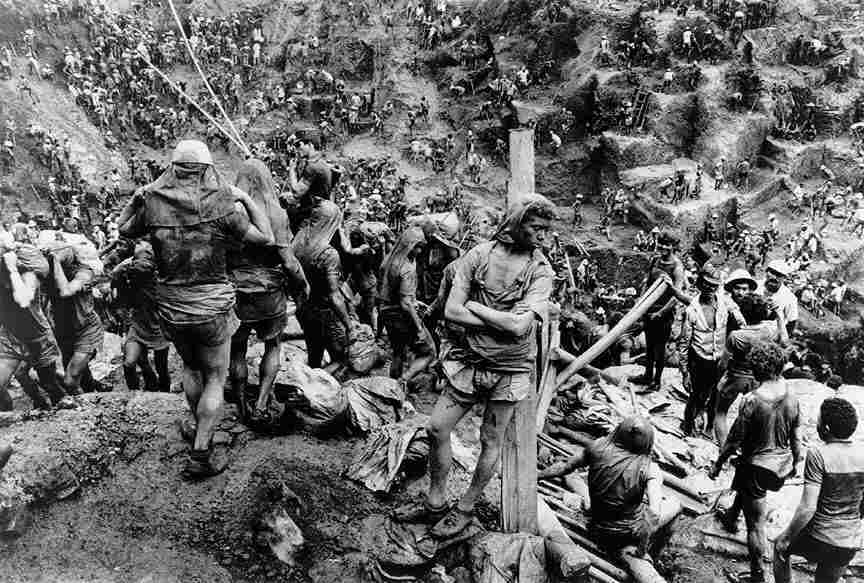


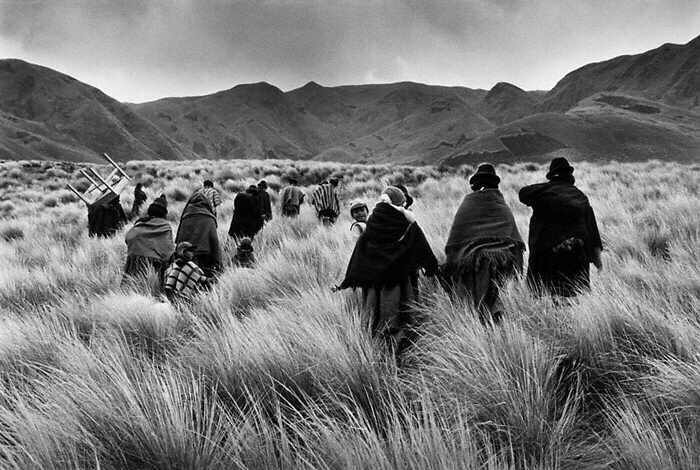
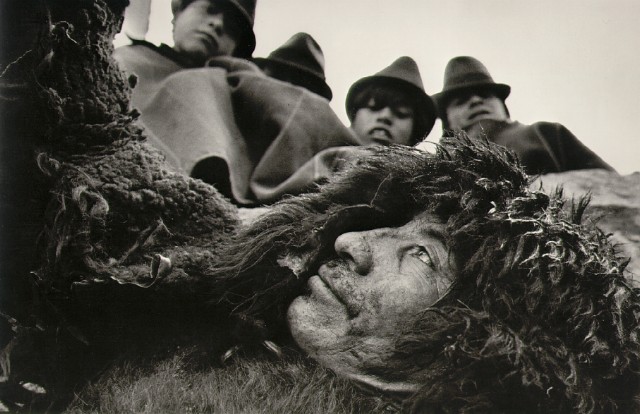
Thursday, April 07, 2005
Wednesday, April 06, 2005
Thoughts on the Pedagogy of Guilt
I got to thinking about guilt yesterday - something being raised catholic taught me a lot about. It was during a seminar on social sustainability and diversity at York University’s Institute for Research and Innovation in Sustainability (IRIS). (Here’s a pdf document that describes the seminar.) Barbara Rahder and Patricia Wood made an excellent case that sustainability (a popular buzz word for almost 20 years – going back to the Brundtland Commission Report of 1987 and perhaps about to get new life from the Millenium Report), which usually gets talked about only in ecological and economic terms, is completely linked with the social. But I can’t report on the seminar without risking misrepresenting it badly. I take very wacky notes.
Barbara or Patricia (I can’t recall who) criticized the One Tonne Challenge as using “guilt” to do public education. I wanted to cheer. And, as I said above, it got me to thinking about guilt (and its close cousin “shame”). I don’t want to diss the One Tonne Challenge (who knows, it might make a difference). But insofar as it relies upon (even promotes) guilt to get people to change their behaviour I think it is flawed. I’ve certainly had my moments of heralding the horrors around us and those to come in the hopes that it might change peoples’ minds and actions – but I also learned early in my career as an activist that guilt (and shame) achieve the exact opposite of education. I think I first learned this from John Berger in his famous essay Photographs of Agony. He reflects on the publishing of violent images from the Vietnam War (images of people in agony).
Many people would argue that such photographs remind us shockingly of the reality, the lived reality, behind the abstractions of political theory, casualty statistics or news bulletins. Such photographs, they might go on to say, are printed on the black curtain which is drawn across what we choose to forget or refuse to know. (in About Looking, 1980, p.38)
Berger makes an eloquent and persuasive case that the reaction to these photos is not what we might think according to that always tricky beast – common sense.
The possible contradictions of the war photograph now become apparent. It is generally assumed that its purpose is to awaken concern. The most extreme examples - as in most of McCullin's work - show moments of agony in order to extort the maximum concern. Such moments, whether photographed or not, are discontinuous with all other moments. They exist by themselves. But the reader who has been arrested by the photograph may tend to feel this discontinuity as his own personal moral inadequacy. And as soon as this happens even his sense of shock is dispersed: his own moral inadequacy may now shock him as much as the crimes being committed in the war. Either he shrugs off this sense of inadequacy as being only too familiar, or else he thinks of performing a kind of penance - of which the purest example would be to make a contribution to OXFAM or to UNICEF.
In both cases, the issue of the war which has caused that moment is effectively depoliticised. The picture becomes evidence of the general human condition. It accuses nobody and everybody.
Confrontation with a photographed moment of agony can mask a far more extensive and urgent confrontation. Usually the wars which we are shown are being fought directly or indirectly in "our" name. What we are shown horrifies us. The next step should be for us to confront our own lack of political freedom. In the political systems as they exist, we have no legal opportunity of effectively influencing the conduct of wars waged in our name. To realise this and to act accordingly is the only effective way of responding to what the photograph shows. Yet the double violence of the photographed moment actually works against this realisation. That is why they can be published with impunity. (in About Looking, 1980, p.40)
Curiously, in looking back at this article for the first time in many years I see that Berger doesn’t use the word “guilt” though my memory has long associated the word with this piece. Feelings of “guilt” are certainly one of the things Berger is referring to. Starting with having read this piece by Berger 25 years ago, I have come to believe deeply that guilt is a terribly negative emotion (or disposition). When we provoke feelings of guilt in people whom we fancy we are educating, it is the guilt that becomes the object of attention, not the issue you are trying to bring attention to. Guilt has two relatively simple solutions: penance and denial – neither of which necessarily has anything to do with changing things that are wrong with society. Using guilt gives people the terribly easy out of displacing their discomfort (or “shock” or horror or grief) from the cause of that discomfort to the more private domain of ones feelings (of guilt). And so, not only does guilt displace attention, it can further obscure that which needs changed.
Saturday, April 02, 2005
Ethics for Activists - 7
The following story was an immediate favourite of my neice when she was 6 years old.
AND A HORSE CAME BACK
Once upon a time there lived a poor farmer who lived alone with his one son. They were poor and lived a hard life. One day their only horse ran away. Their fellow villagers lamented saying, “What will you do now? That was your only horse. How will you farm your land. You are so unlucky.”
To this the poor farmer said, “We’ll see.”
A few days later the farmer’s horse came back bringing with it a wild horse. And the villagers said, “Now you have two horses to work your land. You’re so lucky!”
And the farmer said, “We’ll see.”
The next day the farmer’s son was taming the wild horse when he was thrown from her back and broke his leg. And the villagers said, “Now who will help you work your land? That is your only son. How unlucky.”
And the farmer said, “We’ll see.”
A few days later the army came through town. They were there to draft all the able-bodied young men to fight in a distant war for their emperor. All the young men of the village, except for the poor farmer’s injured boy, were taken away. The villagers watched as their children were taken away. They looked at the poor farmer and his boy and said, “You’re so lucky.”
And the farmer said, “We’ll see.”
Subscribe to:
Posts (Atom)